
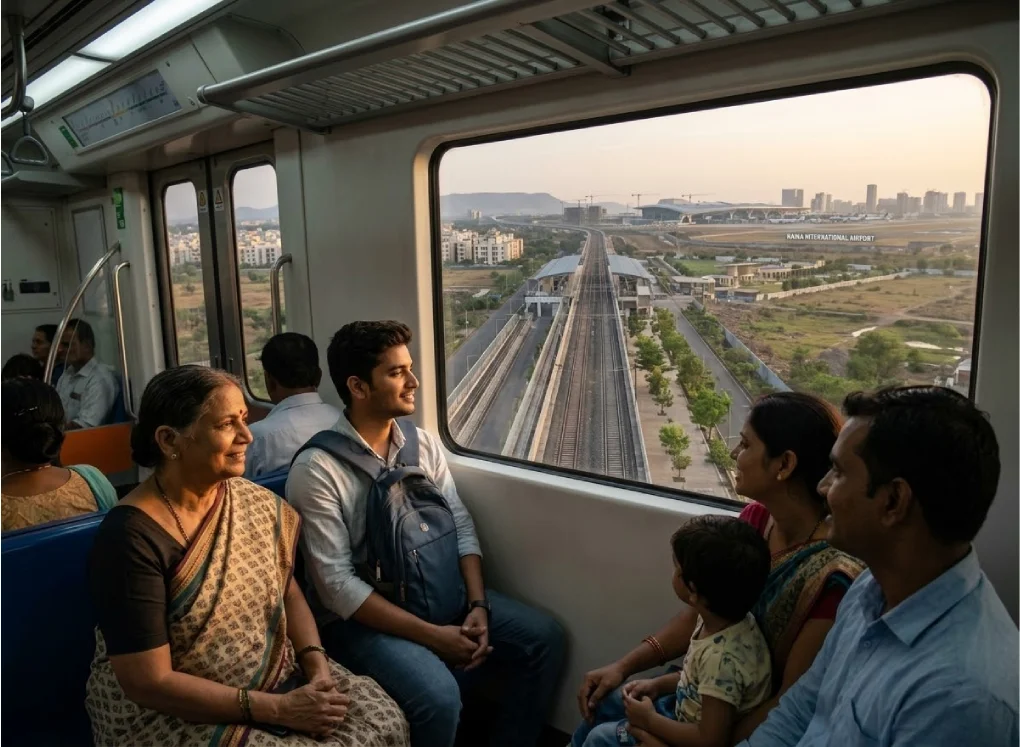
The current ground reality of February 2026
The engineering teams have finally gotten past the biggest physical obstacles, like the Waverly tunnel, which was a huge pain for years because of the hard rock. Almost 85% of the physical work is done as of this month. Now the focus is on the last electrical wiring and signaling. The original flyers said the end of 2025, but it looks like public local trains will actually start running in the middle of this year.
- Track-laying momentum: Double-line tracks are being laid quickly across the Chikhale, and Mohape stretches to start summer trial runs on time.
- Station structures standing. The skeletons of the five new stations are now clearly visible, with platforms and footbridges entering the final finishing stages.
- Signal system integration. The complex electronic interlocking that allows local trains to run every twenty minutes is currently being tested at the Mohape and Chowk stations.
- Signal system integration. The complex electronic interlocking that allows local trains to run every twenty minutes is currently being tested at the Mohape and Chowk stations.
Slashing the commute to Navi Mumbai hubs
The long distance to Navi Mumbai’s business centers has always been a major problem for people living in Karjat or Neral. You either boarded a slow bus or spent half your day switching trains at crowded places like Thane, which is a nightmare at rush hour. This straight path links the Central Line and the Harbour Line without any unpleasant detours. It turns a hard two-hour walk into a smooth 45-minute trip, making it possible for everyone to work in Vashi every day.
- Direct connectivity: Commuters will no longer need to touch Kalyan or Thane to reach Navi Mumbai, removing thousands of people from those crowded platforms.
- Forty-five-minute travel. The new travel time between Panvel and Karjat will be strictly under fifty minutes once the fast locals start their regular commercial runs.
- Harbour line expansion. This project effectively extends the reach of the Harbour Line locals into the heart of the Raigad district’s residential zones.
- Frequency and timing. Unlike the current single line, which is shared with goods trains, this dedicated double line allows for a consistent suburban timetable every day.
The real estate gold rush in NAINA zones
Investors are flocking to the areas around Mohape and Chikhale because these places are no longer merely dots on a map. They are currently the main residential backbone of the Navi Mumbai International Airport influence area, which is also known as NAINA. As the lines approached the stations, property prices in these areas rose by 15% in just the last year. Ten years ago, if you missed the bus in Panvel, this rail line provided you another chance to get to the market at a good price.
- Satellite-city growth: Towns like Chowk are changing from places to go on the weekends to places where many people will live and work in the new Third Mumbai.
- Proximity to the airport: The corridor runs through the airport influence zone, so these stations will be the main places for future airport workers to reach their jobs
- Affordable housing surge. Large developers are launching massive townships near Mohape station, where the land is still cheaper than the saturated Panvel market.
- Infrastructure synergy. The rail line is being developed alongside new DP roads and water pipelines, ensuring these new sectors do not turn into unplanned slums.
Engineering marvels and last-mile gaps
The government makes it look easy to build a railway line across the Sahyadri foothills in a PowerPoint slide, but it’s not. The project had to contend with clearing forests and very difficult soil conditions, which pushed the timetable back from 2025. Even now, with the rails almost done, the inhabitants’ biggest worry is how they will travel from the new stations to their homes. The tracks are in place, but the roads leading to the stations, like those in Chikhale, still need significant work before they can handle heavy traffic.
- Waverly Tunnel is the best. Using modern Austrian tunneling technology kept the slopes stable as the huge two-kilometer hole was dug.
- Cross rivers. Many small and large bridges have been built to keep the tracks above flood levels during Raigad’s strong monsoons.
- Problems with getting to the station. The internal roads connecting the new train stations to the main highways are still under construction, which could cause traffic jams at first.
- Need for feeder service. Local governments are currently working on bus and rickshaw routes to connect the five new stations once the first train arrives.
Frequently asked questions
The infrastructure will be ready by March,h but you can realistically expect the first passenger local train by May or June 2026 after safety clearances.
Yes, because thousands of people from the Karjat side who work in Navi Mumbai will bypass those junctions entirely and take the direct route.
Yes, the Panvel Karjat line will be part of the standard Mumbai Suburban Network, and your regular season tickets will work perfectly fine.
Prices have already started moving up, but it is still a solid long-term play because the station will become a major hub for the NAINA region very soon.

Write Your Comment