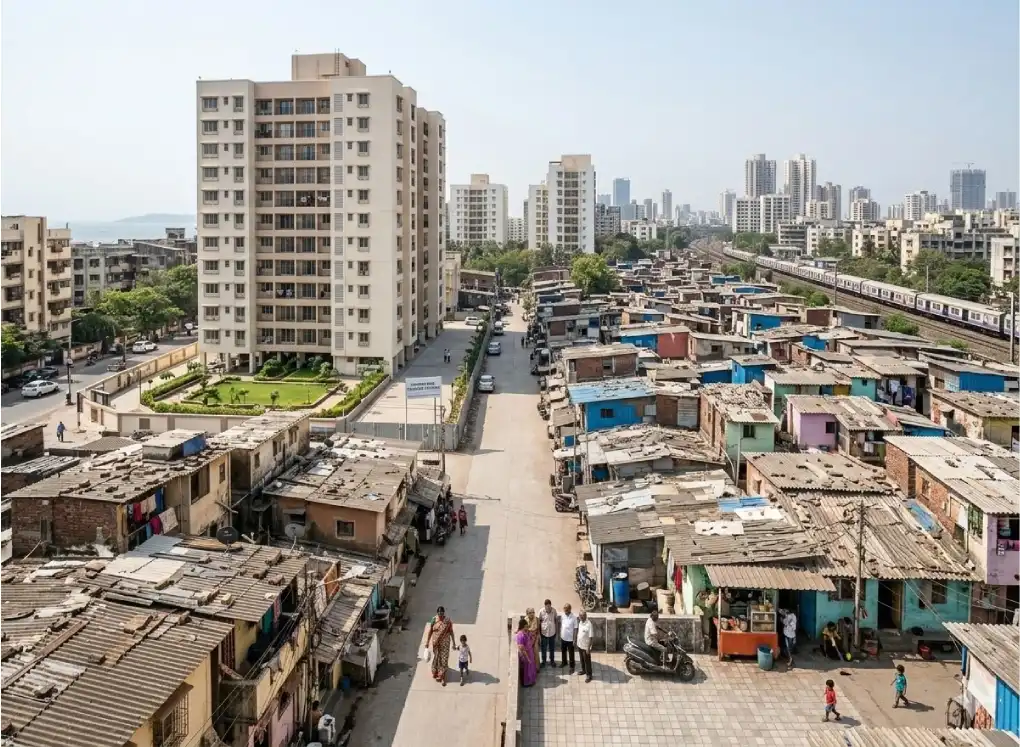
Mumbai, the “City of Dreams,” is going through a major change. For decades, the city’s skyline has been a mix of stunning skyscrapers and huge slums. However, new data indicate that the objective to offer formal, permanent houses for all Mumbai residents is gaining pace. Over the previous 30 years, Mumbai has successfully completed over 2,500 slum rehabilitation initiatives, a significant milestone in urban development.
A Three-Decade Journey
The Slum Rehabilitation Authority (SRA) was established in 1995, which marked the beginning of coordinated slum redevelopment in Mumbai. The goal was straightforward but ambitious: use land as a resource to give free, high-quality houses to slum people. Since then, exactly 2,545 projects have been completed. These projects have transformed the lives of approximately 2.84 lakh families, bringing them from tiny shanties to official buildings with improved safety and hygiene.
The Post-COVID Surge
Interestingly, the pace of work has increased dramatically since the outbreak. While the global economy stagnated during COVID-19, the recovery period saw a “building boom.” Nearly 18% of all completed projects, or over 500 in total, were completed in the last five years alone. This demonstrates that the city is moving quicker than ever to clear the backlog and reach its housing targets.
How it Works
The success of these projects is dependent on a partnership between the government and private builders. Builders are granted the authority to develop slum land in exchange for providing free housing for the current residents. Once the people move into their new houses, the builders may sell the remaining area on the open market. This “win-win” concept assures that the government does not have to spend the entire budget, while citizens receive a permanent roof over their heads.
The Road Ahead
While the development is great, the mission is far from completed. Millions of people continue to live in informal settlements, and the government has set a more ambitious goal: to build 30 lakh homes by 2030. Large-scale proposals, such as redeveloping Dharavi, one of the world’s largest informal settlements, are also in the works. Mumbai hopes to become a slum-free city in the near future by implementing the latest mapping technology and faster approval procedures.
Disclaimer: This article is for informational purposes only. Readers should conduct their own research or consult a real estate professional before making any financial decisions regarding property investments.
Alos Read: Inside Mumbai’s Elite: 8 Areas Redefining Luxury Living.
Source: Hindustan Times

Write Your Comment