
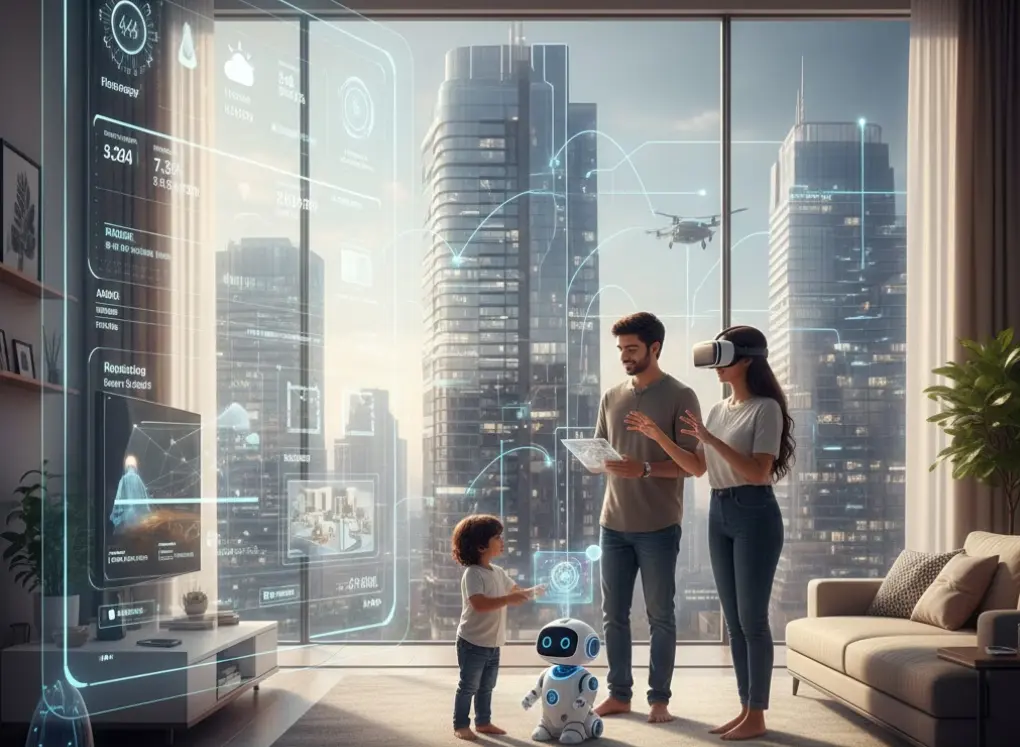
Real estate in Mumbai has always evolved with time. From old mill lands turning into luxury towers to fast-growing suburbs rising because of new roads, metros, and flyovers—every development has changed how the city grows. Today, Mumbai is experiencing another big shift, and this time the driver is technology.
Technology is no longer just an add-on for developers. It has become a core part of how homes are built, marketed, sold, and managed. For buyers, it brings clarity, transparency, and convenience. For developers, it improves accuracy, speed, and cost control. For investors, it opens the door to smarter, data-backed decisions.
At a time when connectivity is unlocking new hotspots, technology is accelerating this growth even further. It helps people understand which locations are rising, what prices make sense, and how future development will shape property value.
Below is a deep dive into the 25 emerging technologies transforming Mumbai real estate and how they are reshaping the entire experience.
Technologies transforming property discovery & buying experience
1. Artificial Intelligence (AI) for property recommendations
AI studies buyer behavior, preferred locations, budget, and lifestyle needs. In a city like Mumbai with thousands of listings and dozens of micro-markets, AI removes guesswork. Instead of searching endlessly, buyers get well-matched options based on data. This helps them avoid confusion and make quicker decisions.
Key benefits:
- Personalized property recommendations
- Reduces search time by 60-70%
- Matches budget with best available options
- Analyzes market trends in real-time
2. PropTech marketplaces
Online marketplaces have made property discovery easier. Instead of visiting multiple brokers or sites, buyers can compare prices, read reviews, check amenities, and verify RERA details in one place. For Mumbai’s competitive market, this level of transparency is a big advantage.
What they offer:
- Centralized property listings
- Price comparison tools
- RERA-verified projects
- User reviews and ratings
- Direct developer connections
3. AI-Based pricing tools
AI tools track demand, supply, infrastructure updates, and historic price trends. Buyers see fair pricing. Developers understand what rates work for each micro-market. This reduces guesswork and increases transparency.
How it works:
- Analyzes lakhs of transactions
- Tracks infrastructure announcements
- Monitors supply-demand dynamics
- Suggests optimal pricing windows
4. AI chatbots for property assistance
Developers use chatbots to answer questions 24/7—about pricing, possession, amenities, or availability. Buyers no longer wait for callbacks. They get instant information that helps them make faster decisions.
Available information:
- Project details and floor plans
- Pricing and payment plans
- Possession timelines
- Amenity information
- Site visit booking
5. Predictive analytics for investment planning
AI predicts which areas will grow based on metro connectivity, road networks, future job hubs, and property demand. Micro-markets like Panvel, Kanjurmarg, Mulund, Vasai, and Thane are rising fast. Data-backed insights give investors more confidence.
Prediction factors:
- Infrastructure development timelines
- Employment hub proximity
- Historical appreciation rates
- Rental yield potential
- Future connectivity projects
Immersive technologies for property visualization
6. Virtual Reality (VR) home tours
VR has changed how Mumbai’s luxury market works. NRIs exploring homes in Worli, Mahalaxmi, or Lower Parel can now walk inside a flat virtually, without being in India. Even local buyers use VR to compare multiple homes in a single visit. VR saves travel time and reduces site visits.
Advantages:
- 360-degree property walkthroughs
- Remote viewing for NRIs
- Multiple property comparisons
- View from different floor levels
- Available 24/7
7. Augmented Reality (AR) for interior planning
Mumbai homes are compact, and buyers often worry about how their furniture will fit. AR solves this by letting users place sofas, beds, dining sets, and decor in a digital format. They can change wall colors, lighting, and layout. It brings clarity and reduces post-possession surprises.
AR features:
- Virtual furniture placement
- Wall color visualization
- Lighting simulation
- Space measurement tools
- Interior design experimentation
8. Digital staging for marketing
Instead of physical staging, developers use digital designs to show what a furnished home looks like. A blank 1BHK can be shown fully decorated, helping buyers visualize the space better.
Marketing benefits:
- Cost-effective than physical staging
- Multiple design styles showcased
- Quick modifications possible
- Better visual appeal online
- Higher buyer engagement
9. Drone surveys for land insights
Drones give a 360-degree view of the site, the surroundings, and future developments. In high-rise locations like Powai, Bandra, or Andheri, drone visuals show actual views from different floor levels. This helps buyers understand future appreciation potential.
Drone capabilities:
- Aerial site surveys
- View documentation from all floors
- Surrounding infrastructure mapping
- Progress tracking during construction
- Neighborhood analysis
Advanced construction & Development technologies
10. Building information modeling (BIM)
BIM creates a detailed 3D model of the project before construction begins. For redevelopment-heavy areas like Dadar, Bandra, Andheri, or Ghatkopar, BIM helps avoid mistakes and delays. It gives buyers a clearer picture of the final product.
BIM advantages:
- Clash detection before construction
- Accurate cost estimation
- Timeline optimization
- Better coordination among teams
- Reduced rework and wastage
11. Digital twin technology
A digital twin is a virtual duplicate of a building that tracks construction, maintenance, and live performance. For large Mumbai projects—especially redevelopment—this helps developers monitor quality and minimize delays. Buyers also benefit because they get real-time visibility without visiting the site repeatedly.
Digital twin uses:
- Real-time construction monitoring
- Predictive maintenance alerts
- Energy consumption tracking
- Performance optimization
- Remote project oversight
12. 3D printing in construction
3D printing speeds up construction by creating walls and structural components quickly and precisely. This can reduce delays—something Mumbai buyers often worry about. It also lowers costs, making homes more affordable.
Benefits:
- 40-60% faster construction
- Reduced material waste
- Complex designs made possible
- Lower labor costs
- Consistent quality output
13. Robotics in construction
Robotic machinery helps developers complete repetitive tasks faster and with fewer errors. This improves quality and consistency across big projects. It also helps maintain safety standards on construction sites.
Robotic applications:
- Bricklaying automation
- Welding and reinforcement
- Material handling
- Concrete pouring
- Safety monitoring
14. Construction monitoring sensors
Sensors track concrete strength, temperature, moisture levels, and structural stability. This ensures strong, long-lasting buildings. It’s especially important in Mumbai’s coastal zones.
What sensors monitor:
- Concrete curing conditions
- Structural load distribution
- Foundation stability
- Moisture and corrosion risks
- Seismic movement detection
15. Green construction technologies
Mumbai’s dense landscape makes sustainability important. Developers use energy-efficient materials, solar panels, rainwater harvesting, and natural ventilation systems. Green tech lowers electricity bills and improves indoor comfort—two valuable benefits for Mumbai’s humid climate.
Sustainable features:
- Solar power generation
- Rainwater harvesting systems
- Energy-efficient HVAC
- Low-VOC materials
- Natural ventilation design
- Wastewater treatment plants.
Smart home & Building technologies
16. Smart home automation
Smart homes are becoming standard in Mumbai’s premium real estate. Automated lights, climate control, video door phones, and smart locks make daily life easier. Home automation also saves energy and improves security.
Smart home features:
- Voice-controlled devices
- Automated lighting and climate
- Smart security systems
- Energy monitoring
- Remote access and control
17. IoT-Enabled buildings
IoT (Internet of Things) connects devices across the building. Societies can monitor water usage, electricity consumption, and waste management. They can also track lifts, security systems, and generator backups. This leads to better living standards and lower maintenance issues.
IoT applications:
- Real-time utility monitoring
- Predictive maintenance alerts
- Automated fault detection
- Energy optimization
- Security system integration
18. Smart grids & Energy systems
Smart meters help societies monitor electricity use and reduce wastage. They help detect faults early and cut utility bills. With rising energy costs in Mumbai, this technology brings long-term savings.
Energy management:
- Individual unit metering
- Peak load management
- Renewable energy integration
- Power quality monitoring
- Automated billing systems
19. Automated parking systems
Parking is one of Mumbai’s biggest challenges. Stack parking and robotic parking solutions help societies use space efficiently. Residents enjoy quicker, safer, and more systematic parking.
Parking solutions:
- Vertical stack parking
- Robotic valet parking
- App-based car retrieval
- Space optimization (50% more cars)
- Reduced parking time
20. Facial recognition in societies
Many Mumbai societies now use facial recognition for gate entry. It improves security and eliminates the need for access cards. Visitors are verified quickly and safely.
Security benefits:
- Contactless access control
- Visitor tracking and logging
- Enhanced security protocols
- No lost access cards
- Integration with CCTV systems
21. Smart waste management systems
Large Mumbai complexes generate large amounts of waste. Smart waste bins use sensors to track capacity and optimize collection. This keeps societies cleaner and reduces manpower needs.
Waste tech features:
- Fill-level monitoring
- Optimized collection routes
- Segregation tracking
- Composting automation
- Recycling management.
Documentation & Transaction technologies
22. Blockchain for secure property records
Mumbai often deals with title disputes, unclear ownership, and redevelopment complexities. Blockchain can store property records securely, making them tamper-proof. This reduces fraud and increases buyer confidence. In the future, digital land records will make property transactions faster and safer.
Blockchain benefits:
- Immutable ownership records
- Reduced title disputes
- Faster verification process
- Lower transaction costs
- Enhanced transparency
23. Digital locker for property documents
Instead of physical copies, agreements, NOCs, and approvals are stored securely online. This reduces paperwork and eliminates document loss. It also speeds up home loan and registration processes.
Document storage:
- Cloud-based secure storage
- Easy retrieval anytime
- Share with banks instantly
- Digital signatures accepted
- Backup and recovery systems
24. Fintech-integrated home loans
Digital loan processing speeds up approvals. Buyers can upload documents online and get faster verification. This reduces delays in finalizing home purchases.
Loan process improvements:
- 100% online applications
- Instant eligibility checks
- Quick document verification
- Faster disbursal (7-10 days)
- Lower processing costs
Property management technologies
25. Contactless property management apps
Everything from society payments to service requests happens through apps. Residents can book amenities, pay maintenance, report issues, and track updates. These apps improve convenience and reduce manual work for housing societies.
App features:
- Online maintenance payments
- Amenity booking system
- Complaint tracking
- Vendor management
- Community announcements
- Digital notice boards
- Visitor pre-approval
How technology will shape Mumbai’s future
Technology helps buyers study these changes, track price movements, understand rental yield, and make smart investment decisions. It also helps developers build better projects aligned with future needs.
The road ahead
For buyers:
- More transparency in pricing and quality
- Faster, simpler buying processes
- Better visualization of properties
- Data-driven investment decisions
- Enhanced post-purchase experience
For developers:
- Reduced construction time and costs
- Better quality control
- Improved buyer trust
- Efficient project management
- Competitive advantage in marketing
For investors:
- Access to predictive analytics
- Better ROI tracking
- Identification of emerging hotspots
- Portfolio management tools
- Risk assessment capabilities.
Conclusion: The tech-driven real estate revolution
Technology is not just helping real estate—it is transforming Mumbai’s entire property landscape. From AI to automation, from VR to IoT, each innovation plays a big role in improving the experience. Buyers enjoy clarity, developers gain speed, and investors get stronger insights.
In a market where every square foot is valuable, technology ensures every decision is wise, transparent, and future-ready.
As Mumbai continues to expand with infrastructure projects like the Coastal Road, MTHL, and metro network, technology will be the force that helps stakeholders navigate this transformation efficiently. The future of Mumbai real estate is not just about location—it’s about smart, tech-enabled living.
Frequently asked questions (FAQs)
Technology is making the home-buying process faster, clearer, and more convenient. Tools like AI-based recommendations, virtual tours, digital documents, and online property platforms help buyers compare options, understand pricing, and make better decisions without confusion. Buyers can now complete most of the research and documentation online, reducing the time from property search to purchase by several weeks.
VR allows buyers to take a full home tour without visiting the site, experiencing the layout, views, and space dimensions virtually. AR helps them visualize interiors, furniture placement, and room layouts in real-time using their smartphones. For busy Mumbai buyers and NRIs, this saves time and gives a clearer idea of how the home will look before they buy, eliminating the need for multiple site visits and reducing decision-making time significantly.
Yes. Blockchain can make property records more secure and reduce fraud by creating tamper-proof digital records of ownership and transactions. Since Mumbai has many redevelopment projects and title-related disputes, blockchain can bring more transparency and trust in documentation. It eliminates the need for multiple intermediaries, speeds up verification processes, and provides a permanent, accessible record of property history that cannot be altered or disputed.
Smart homes offer features like automated lights, locks, sensors, and climate control that enhance convenience and security. IoT-enabled buildings help societies manage energy, water, waste, and security more efficiently—important in a dense city like Mumbai where space and resources are limited. These technologies can reduce utility bills by 20-30%, improve safety through real-time monitoring, and provide residents with greater control over their living environment through mobile apps.
Technologies like drone surveys, 3D printing, construction robots, BIM, and monitoring sensors help developers reduce errors, speed up construction, and maintain better quality standards. These tools ensure safer, faster, and more efficient project delivery. BIM helps identify design conflicts before construction begins, sensors ensure structural integrity, and robotics maintain consistency in execution—all contributing to projects that are completed on time with fewer defects and better overall quality.

Write Your Comment