
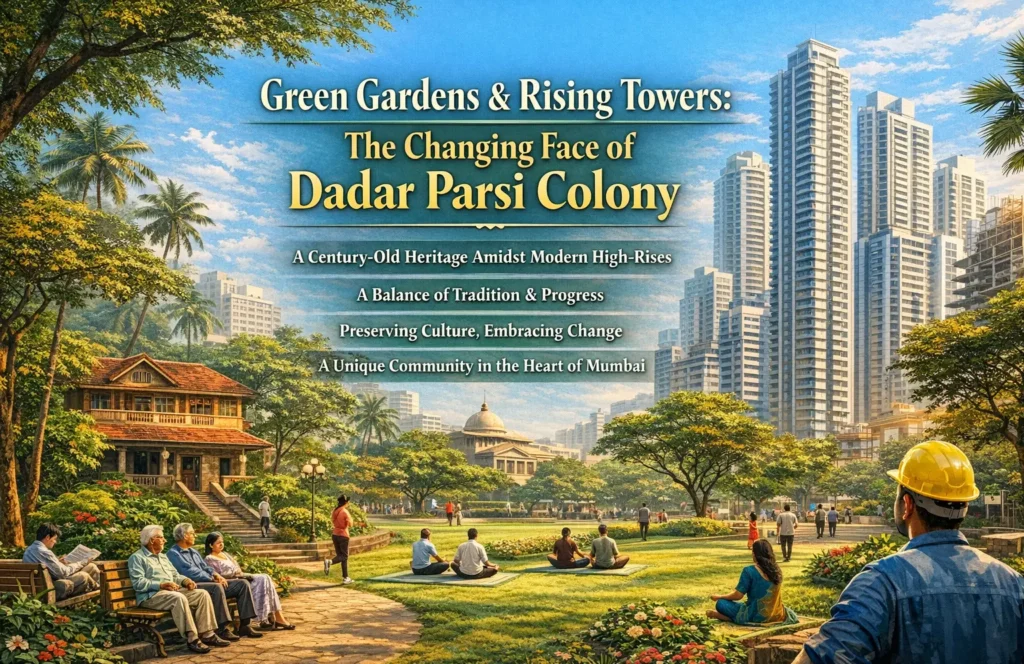
Mumbai is a city of constant movement, a place where the old is often cleared away to make room for the new. However, tucked away in the heart of the city lies a peaceful neighborhood that tells a different story. The Dadar Parsi Colony, a century-old residential enclave, is currently at the center of a delicate balancing act between preserving its rich history and embracing modern growth. A
The Vision of a model village Established in the 1920s by Muncherji Edulji Joshi, the Dadar Parsi Colony was designed with a specific dream in mind. At a time when the rest of the city was becoming crowded, Joshi envisioned a “garden suburb.” He planned wide, tree-lined streets, low-rise buildings no more than two or three stories high and over a dozen public parks. This layout earned the area the nickname “Five Gardens,” and even today, it remains one of the few places in Mumbai where the air feels fresh and the shade of ancient trees covers the roads.
The rise of the skyscrapers In recent years, the skyline of this quiet neighborhood has begun to change. As old buildings require repairs and the demand for modern amenities grows, several traditional houses have been replaced by luxury high-rise towers. Modern skyscrapers, some reaching over 20 stories, now stand alongside the classic stone-and-wood structures of the past. This shift brings modern comforts like elevators, better parking and advanced security, but it also creates a visual contrast between the old world and the new.
What keeps the heritage alive? One might wonder why the entire area hasn’t been turned into a forest of concrete towers yet. The answer lies in the community’s unique rules. Most properties here are governed by “covenants,” which are legal agreements ensuring that only members of the Parsi community can live in or buy these homes. These rules have acted as a protective shield, slowing down the pace of commercial development and keeping the community’s identity intact.
Furthermore, residents are working toward getting UNESCO recognition for the area. By archiving the history and folklore of the colony, they hope to protect its status as a “heritage precinct,” ensuring that any new construction respects the environment and the local aesthetic.
A community-first future The challenge for the Dadar Parsi Colony is not just about keeping old buildings standing, it is about infrastructure. With more people living in high-rises, the narrow roads face more traffic, and the old water and drainage systems are under pressure. The goal for the future is “smart” redevelopment, where new buildings are allowed, but they must be designed to work in harmony with the trees and the peaceful spirit of the neighborhood.
Today, the colony remains a symbol of resilience. It proves that even in a rapidly growing metropolis like Mumbai, it is possible to cherish your roots while stepping into the future.
Also Read – The gold rush in Mumbai: A new milestone in land auctions
Disclaimer – This article is for general informational purposes only. It does not constitute real estate or legal advice. All efforts were made to ensure accuracy at the time of writing.
Source – ET Realty

Write Your Comment