
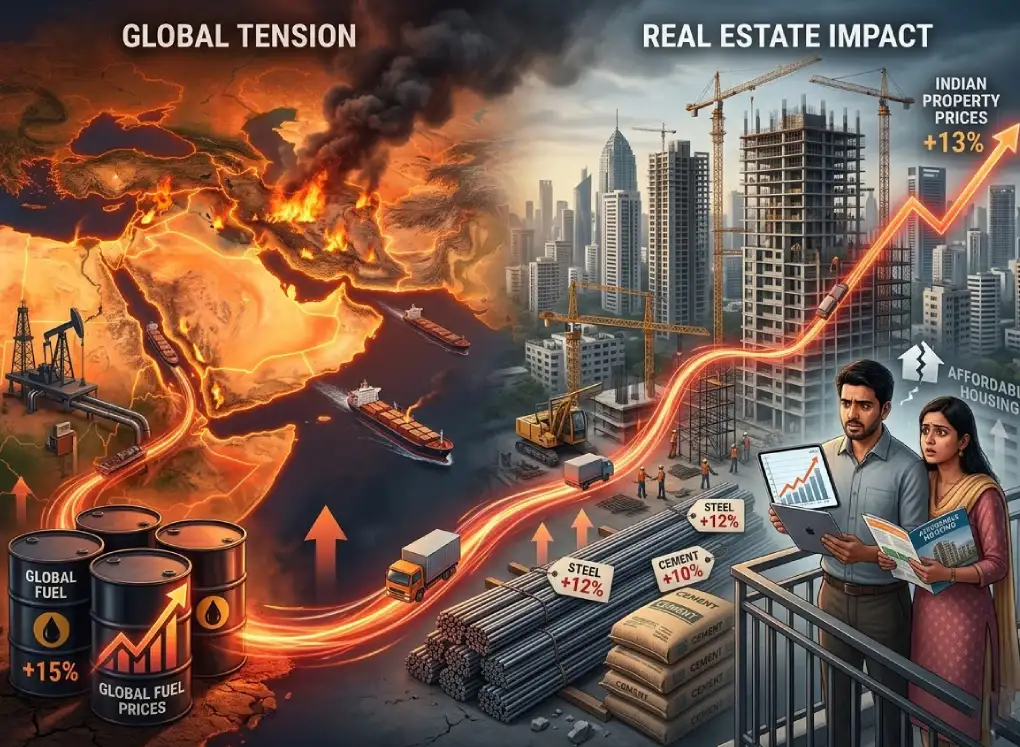
The acquisition of a residence is the most significant financial objective that numerous families will ever pursue. However, the journey to homeownership often depends on factors beyond the reach of local authorities. Real estate experts and developer bodies, including CREDAI and NAREDCO, are raising concerns about the potential for a spike in construction costs, which could result in higher prices for homebuyers if conflicts in West Asia (the Middle East) persist for an extended period.
The Link Between Global Conflict and Local Housing
It may seem unusual that the price of a property in your city can be influenced by a conflict that is thousands of miles away. The global supply chain is the point of connection. Materials that are either imported or produced using energy sources such as oil and gas are utilized in the construction of the majority of recently constructed buildings.
The most immediate response to instability in key oil-producing regions is the price of crude oil. A rise in fuel prices immediately inflates the total construction cost, as oil is required to transport each brick, sack of cement, and steel rod to a construction site.
Key Materials Under Pressure
There are three main areas where developers expect to see price hikes if global tensions don’t settle:
-
Steel and Aluminum: These metals are essential for the skeleton of any building. Their production is energy-intensive. If energy costs rise globally, the price of steel follows suit.
- Bricks and Cement: The production of cement demands huge amounts of energy and heat, similar to that of steel. These fundamental materials are significantly more expensive due to the high prices of coal or gas.
- Freight and Logistics: The majority of basic materials are transported over extended distances by sea or land. If shipping routes are disrupted or petroleum prices increase, developers are required to pay a premium to transport materials to the site.
Will Developers Absorb the Cost?
In the past, many developers attempted to maintain consistent prices in order to attract purchasers. However, the housing sector is right now facing a shortage of profit margins. Developers will be forced to transfer the additional burden to the end-user, the purchaser, if the construction cost increases by more than 5-10%, according to prominent industry experts.
This implies that the price of a house that is presently under construction may be revised, or that new projects may be launched at a significantly higher cost than initially anticipated.
What Should Homebuyers Do?
People who work in the field say that people who are looking to buy should keep a close eye on the market. If you have already chosen a home and agreed on a price, you might want to close the deal as soon as possible. People who want to buy in the future should include a “buffer” of 10-15% in their budget to account for possible changes in the market.
Even though the real estate market has been very strong lately, it can still be affected by changes in the world economy. Peaceful endings to international wars are hoped for because they would save lives and keep the dream of affordable housing alive for millions of people.
Disclaimer: This article is for informational purposes only and does not constitute financial advice. Real estate prices are subject to various market risks. Please consult an expert before making any investment decisions.
Also Read: Auction Success: Bombay High Court Protects Rights of Property Buyers.
Source: ET Reality

Write Your Comment