
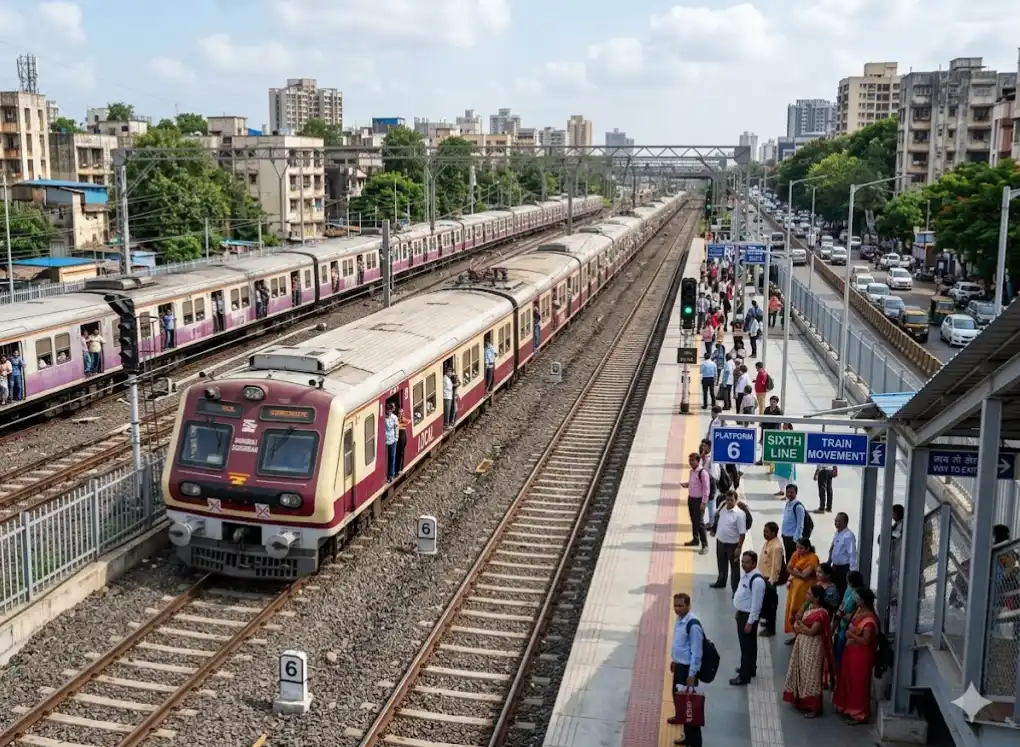
Standing on the edge of a platform at Borivali during the morning rush brings a specific kind of dread when your fast local suddenly stops mid-track for no apparent reason. We have spent decades watching long-distance express trains crawl past our windows while our own local sits idle near the Kandivali signal because there was not enough room for everyone to move at once. The recent commissioning of this final stretch between Kandivali and Borivali has finally broken that bottleneck by giving the heavy outstation trains their own dedicated path.
It is a permanent fix for the daily friction between office goers and travellers that has historically choked the western corridor. This new line provides the literal breathing room that our suburban lifeline has been gasping for, as it finally separates long-distance traffic from the city’s local heartbeat.
The End of the Mid-Track Halt Mystery
The most frustrating part of a Mumbai commute has always been those unexplained halts between stations that throw your entire schedule into a mess. Many people don’t realise that these delays happen because our local trains share the same two fast tracks with mail and express trains from across the country.
- Dedicated corridor logic: Long-distance trains now have a separate three-kilometre path, which means they no longer have to loop behind your local and cause those annoying signal waits.
- Increased speed limits: The new tracks allow trains to reach up to 80 or even 100 kilometres per hour, which clears the section quickly and keeps the entire line moving.
- Operational flexibility: Station masters can now reroute trains more effectively during peak hours because they have more physical steel on the ground to play with.
- Reduction in signal friction: By removing outstation trains from the suburban tracks, the railway has effectively cleared the path for smoother local runs every single morning.
Tech Upgrades and the Electronic Brain
This project was not just about laying down some tracks,s but it involved a massive technical overhaul of the signalling systems at one of the busiest junctions in the country. The old manual ways of switching tracks were too slow for a city that moves at our pace, and they often led to technical failures during the monsoon.
- Largest electronic interlocking system: The heart of Borivali station now runs on a massive digital signalling brain that manages hundreds of routes simultaneously with zero manual intervention.
- Fail-safe mechanisms: The new tech includes built-in backups to ensure that even if one signal glitches, the rest of the line stays operational, rather than paralysing the western front.
- Faster yard movement: Trains exiting the Kandivali car shed can now merge onto the main lines much faster, helping start the morning services exactly on time.
- Digital path optimisation: The system automatically calculates the most efficient route for each incoming train, reducing the time spent idling at the outer signals.
The Real-World Impact on Your Daily Commute
For the person standing in a packed train near Malad or Goregaon, this infrastructure win translates into minutes saved every single day, which adds up to hours over a month. It is about the predictability of reaching your desk on time without having to account for the usual railway drama that we have all grown used to.
- Punctuality recovery: Even if a train starts slightly late, it now has a better chance of making up time because there are fewer obstacles in its path toward Churchgate.
- Capacity for new services: Having more track space means the railway can finally think about adding more AC locals and fast services that the western suburbs have been demanding.
- Peak hour relief: The gap between two fast trains during the morning rush can now be narrowed because the tracks are no longer clogged by outstation traffic.
- Buffer zone creation: During emergencies or track maintenance, the extra line serves as a bypass to keep at least some services running while repairs are underway on the other tracks.
Future Expansion and the Missing Links
While the Kandivali to Borivali stretch is a massive win, it is part of a much larger plan to make the entire western line a smooth run from the heart of the city to the far suburbs. We’re continuing to address bottlenecks at other stations with the same urgency.
- Harbour line extension: Work is already underway to extend harbour services further north,h which will give commuters even more options to reach the eastern side of the city.
- Bandra to Mumbai Central goal: The next big challenge is to complete the sixth line toward the southern tip of the city to create a truly seamless corridor.
- Station platform upgrades: Borivali and Kandivali are seeing improvements in platform height and entry points to handle the increased frequency of trains.
- Zero-encroachment zoning: New boundary walls are being built along the tracks to ensure that external interference does not slow trains or pose safety hazards.
Frequently Asked Questions
The extra track capacity allows the railway to slot in more services without disrupting the current timetable of regular non-AC locals.
It significantly reduces the chances of stopping, but some signals might still hold a train for a minute if the platforms at the station are already occupied.
Since the bottleneck at Borivali has been cleared, the fast trains heading north can maintain their speed and reach the outer suburbs much more consistently.
The final stages involved major night blocks and intense sprints to ensure the work was completed with minimal disruption to the daily office crowd.

Write Your Comment