
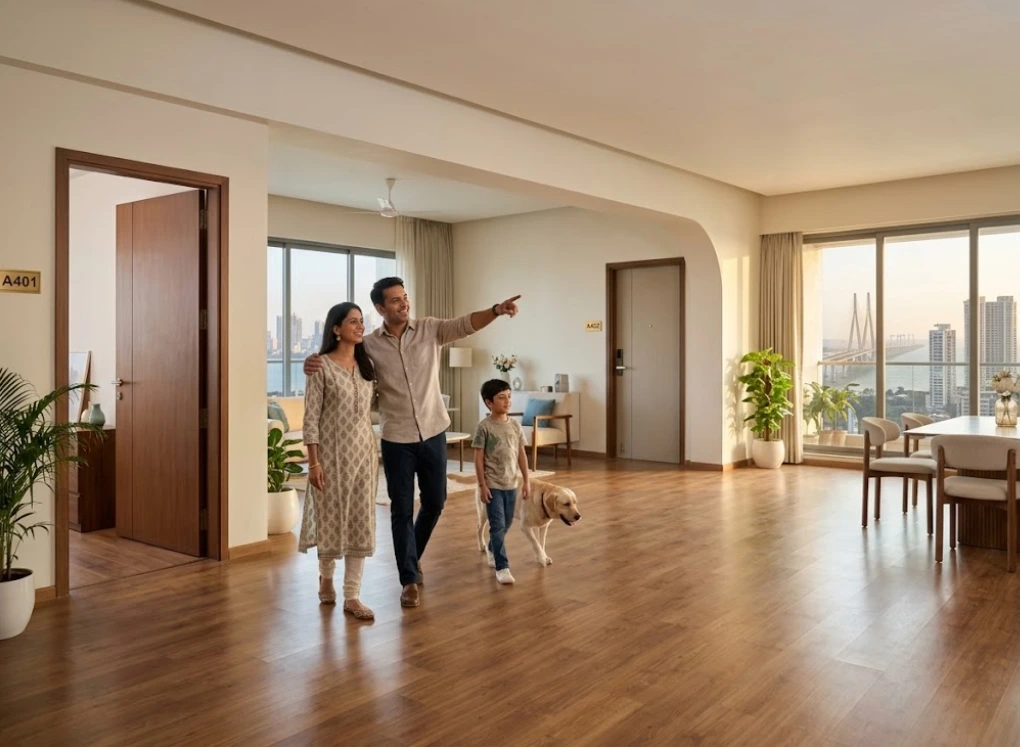
In the real estate sector, the idea of a big, wide home sometimes inspires buyers to buy many flats next to each other and pull down the walls to make one big living space. This is a beautiful way to live, but it does bring up a big concern for your wallet: If you treat seven separate flats as one residence, can you get a tax break on all of them?
Understanding the Tax Benefit
Section 54 of the Income Tax Act provides homeowners in India with significant support. You don’t have to pay taxes on the money you make from selling a home if you use that money to acquire another “residential house.” For a long time, people argued about what “a residential house” meant. Did it indicate just one flat, or could it mean a whole building with multiple flats?
Recent court cases and legal discussions have made this clearer. The tax department usually cares more about how the property is used than how many door numbers it has on paper.
The Concept of a “Single Housing Unit”
Conditions to Keep in Mind
This sounds like a terrific way to get around the rules, but there are some things you need to do to keep your tax exemption:
- Physical Integration: You can’t rent out the units separately; they have to be together. They have to be physically connected to make one living space.
- Location: The apartments must be next to each other, either on the same floor side by side or one above the other (duplex style).
- Usage: The same family must live in the whole merged region as one home.
Why This Matters Today
As the market for luxury real estate grows, many wealthy people are choosing “jodi” flats or whole floors in high-end structures. Investors can save lakhs in capital gains tax by knowing that the law sees a “home” as more than just a “flat number.”
But it is always a decision based on facts. The tax officer will review the plan and its purpose. If the flats are used as distinct homes with their own kitchens, the tax break might only apply to one of them.
Conclusion
Combining seven flats into one is a brave architectural choice that can also be a sensible economical choice. As long as the end result is a single, usable home for one family, the tax benefits of Section 54 are still available. It shows that the law sees a “house” as more than just the numbers on the door. It also looks at the life lived inside it.
Disclaimer: This article is for informational purposes only and is not professional tax advice. Tax laws change frequently; please consult a qualified chartered accountant before claiming any tax exemption for merged flats.
Also Read: Digital Convenience: Update Your Mumbai Property Details From Home
Source: Hindustan Times

Write Your Comment