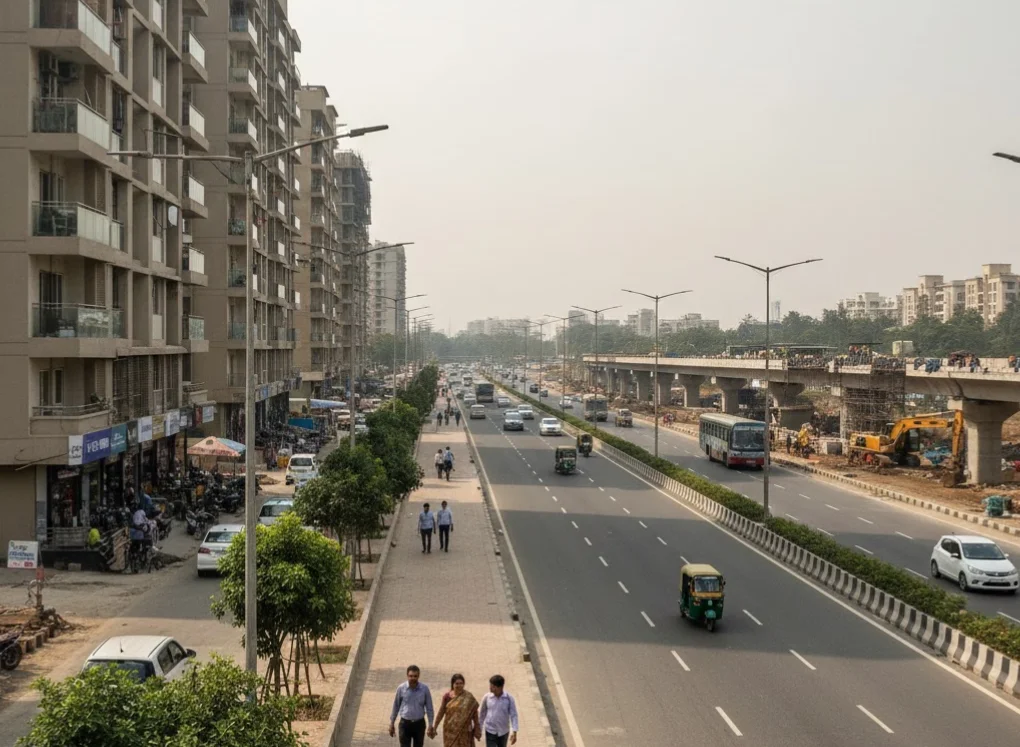
The Goregaon–Mulund Link Road (GMLR) is one of Mumbai’s most ambitious infrastructure projects, designed to transform how the city moves, connects and grows. For years, commuters traveling between the western and central suburbs have struggled with long travel times, traffic bottlenecks and limited cross-city connectivity. GMLR steps in to solve all of that.
This project is more than just a road, it’s a strategic upgrade that will influence homebuyers, investors, developers and anyone who depends on smoother travel across the city. As the project progresses, the real estate markets around Goregaon, Mulund, Powai and adjoining pockets are already experiencing a noticeable shift in demand, prices and long-term value.
In this blog, you’ll discover why GMLR matters, how it reshapes connectivity, how it influences property markets, and what it means for the future of living and investing in Mumbai.
What exactly is the “GMLR?”
The Goregaon–Mulund Link Road is a 12 km east–west corridor that connects Goregaon in the Western Suburbs to Mulund in the Central Suburbs. The highlight of this project is the twin underground tunnel passing through the Sanjay Gandhi National Park (SGNP), covering around 4.7 km of the total stretch.
Once completed, GMLR will become the fourth major east–west connector in Mumbai after:
- Jogeshwari–Vikhroli Link Road (JVLR)
- Santa Cruz–Chembur Link Road (SCLR)
- Andheri–Ghatkopar Link Road
However, unlike the others, GMLR offers a signal-free, high-speed and eco-sensitive route, making it the most superior connector yet.
GMLR is a game-changer for Mumbaikars
1. Travel time shrinks dramatically
Currently, traveling from Goregaon to Mulund takes anywhere between 60 to 90 minutes, depending on traffic. With the GMLR tunnel, this could drop to 12–15 minutes.
This change is massive, not just for daily commuters but also for businesses, logistics and transport networks across Mumbai.
2. Direct access to two rapidly growing suburbs
Goregaon and Mulund have become real estate hotspots in the past five years. Both offer:
- Strong social infrastructure
- Upcoming commercial hubs
- Growing residential clusters
- Increasing demand from mid-segment and premium buyers
GMLR strengthens the connection between these two growing markets.
3. Reduced traffic on JVLR, SCLR & Ghodbunder road
Once operational, GMLR will redistribute traffic away from other heavily congested east–west links, making the overall road network smoother.
4. Boost to real estate values
Connectivity always drives real estate appreciation and GMLR is no exception. You can expect:
- Higher demand for residential and commercial spaces in Goregaon, Borivali, Mulund and Bhandup
Increased interest from developers - Price appreciation of 8–15% around the connected zones over the next few years
5. Better urban mobility for future metro users
GMLR will integrate seamlessly with the upcoming:
- Metro Line 6 (Swami Samarth Nagar → Vikhroli)
- Metro Line 10 (Gaimukh → Shivaji Chowk, Mira Road)
This ensures smoother multimodal travel.
How does GMLR impact residential real estate?
Goregaon
Goregaon has already evolved into a luxury-lifestyle micro market with:
- New-age residential townships
- Major corporate offices in Goregaon East
- Film City & commercial activities
- Upcoming large-scale retail developments
GMLR adds a new layer of connectivity advantage.
Mulund
Mulund continues to attract homebuyers due to:
- Its green surroundings
- Strong public infrastructure
- Well-planned road networks
- Growing high-rise developments
GMLR brings Mulund closer to Mumbai’s western job hubs. Western suburbs appreciation potential
How does GMLR impact commercial real estate?
Businesses in Powai, Goregaon and Mulund will recap the benefits of:
- Shorter logistics time
- Wider talent access from both suburbs
- Lower operational delays
- Better vehicle movement for commercial transport
This upgrade increases the appeal of office spaces in Aarey, Goregaon East, Mulund and Powai.
Environmental sensitivity & tunnel design
Since the road passes below SGNP, authorities have ensured:
- No surface disruption
- Zero impact on wildlife
- Use of advanced tunnel-boring machines
- Ventilation, safety and emergency systems
This makes it one of India’s most eco-conscious infrastructure projects.
Conclusion
GMLR isn’t just a connector, it’s a mobility revolution. It unlocks access, reduces congestion, boosts real estate value, and improves quality of life for thousands of families. As Mumbai expands, projects like these shape the next era of development.
If you’re a homebuyer or investor, keeping an eye on Goregaon and Mulund could be a strategic long-term move.
FAQs
Absolutely. Faster mobility means improved productivity and efficiency for businesses. Corporate parks, retail hubs, warehouses, IT companies and industrial units will benefit from smoother employee travel and quicker inter-suburban connectivity. Reduced commute fatigue also helps boost workplace morale. Over time, commercial hotspots in Goregaon, Mulund, Powai, Vikroli and Andheri are expected to gain even more traction.
GMLR is expected to play a crucial role in shaping Mumbai’s next phase of urban growth. By enhancing connectivity between major suburban hubs, the project will strengthen links to existing and upcoming metro lines, new link roads, and commercial zones. It will also support the city’s expanding real estate markets by making previously hard-to-reach areas more accessible. For investors, developers and daily commuters, it becomes a backbone for long-term urban planning.
The GMLR is being designed primarily for private vehicles, taxis, and light commercial vehicles. This ensures smooth traffic flow inside the tunnels and maintains high safety standards. Heavy vehicles such as large trucks may be restricted depending on final engineering reviews and government policies. Clear guidelines will be announced before the tunnel becomes operational.
The Goregaon-Mulund Link Road is currently progressing through multiple phases of construction, including tunneling work, road development and installation of safety systems. While the project is moving steadily, the completion timeline may shift depending on factors such as tunneling speed, geological challenges and the pace of government approvals. Large-scale tunnel projects often require careful monitoring and engineering precision, so timelines can evolve as work advances. Authorities are expected to share updated schedules as major milestones are achieved.
Yes. The GMLR is set to significantly ease the daily travel burden for thousands of commuters moving between the eastern and western suburbs. Instead of navigating crowded junctions, narrow internal roads and long detours, commuters will get a direct, signal-free route through the tunnel. This will sharply cut down travel time, reduce bottlenecks on existing connecting roads and create a smoother, more predictable commuting experience especially during peak hours.

Write Your Comment