
You know that moment when you’re halfway to work and suddenly panic because you can’t remember if you switched off the geyser? That used to mean turning the car around or spending the whole day anxious about the electricity bill. Now you just pull out your phone, open an app, and turn it off from wherever you are. Crisis averted. The day continues.
This kind of thing happens so often now that we’ve stopped noticing how strange it would have sounded even five years back. My neighbor, an elderly gentleman who still writes letters by hand, recently showed me how he uses his phone to check who’s at his door before opening it. He didn’t buy the video doorbell because he’s tech savvy. He bought it because his daughter, who lives in another city, worries about him opening the door to strangers. The technology didn’t change him. His daughter’s worry did. The technology just made a solution possible.
India’s entry into smart homes didn’t follow anyone’s roadmap. It wasn’t planned. It happened in bits and pieces, driven by actual problems people faced every day. The couple who both work and can never be home when the gas cylinder delivery arrives. The parents are trying to monitor if their kids reached home safely from school. The young guy in a one room flat trying to figure out why his electricity bill crosses three thousand every month when he’s barely home. These aren’t people chasing some futuristic dream. They’re just trying to make their daily lives a little less chaotic.
And somewhere along the way, their homes got smarter without them really planning for it.
The stuff that actually made a difference
When you walk into someone’s house now, especially if it’s been built or renovated recently, you’ll notice small differences. The light switches look a bit odd. There’s a small cylinder sitting near the TV that responds when you talk to it. A camera tucked above the main door. Nothing screams “smart home.” It just feels like things work a bit differently.
What people have actually started using:
- Those door locks that open with your fingerprint or a code, which sounds fancy until you realize it’s mostly about not digging through your bag for keys when you’re carrying groceries and being able to let the maid in even when you’re stuck in traffic.
- Air purifiers that connect to your phone and tell you when the air outside is too toxic to open windows, something that started in Delhi but spread everywhere once people realized their kids were coughing through winters.
- Simple smart plugs that you stick between the wall and any appliance, suddenly making your old geyser or AC controllable from your phone, which is less about showing off and more about not wasting electricity on things running when nobody’s home.
- Video doorbells became common not because of theft, though that’s part of it, but because women living alone got tired of the anxiety that comes with unexpected knocks, and elderly folks didn’t want to keep getting up to check who it was.
It’s less about the future and more about small conveniences adding up.
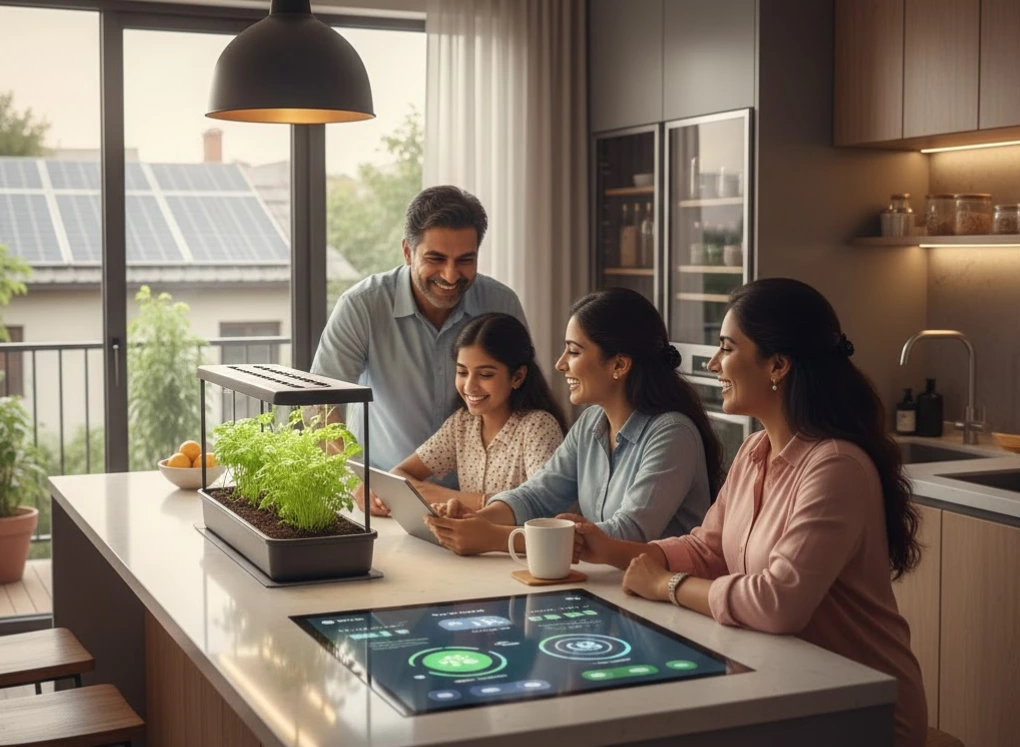
What’s interesting is who’s buying this stuff. It’s not the ultra wealthy. They’ve always had people managing their homes for them. It’s the middle class. The working couples. The nuclear families without extended relatives around to help. The people balancing jobs and home and kids and aging parents, all at once. For them, getting the house to handle some tasks automatically isn’t luxury. It’s just practical.
The electricity thing became huge last year and this year. Bills kept climbing. The government started pushing rooftop solar with subsidies. People suddenly got interested in knowing exactly where their power was going. Smart meters. ACs you can schedule. Lights that turn off when rooms are empty. These things cost money upfront, sure. But they pay for themselves in a year or two just through lower bills. That’s not a gadget purchase. That’s basic financial sense.
The Infrastructure that finally started working
For years, this technology existed but was frustrating to use in India. Internet would drop constantly. Power cuts would reset everything. Devices from different brands refused to work together. Apps were confusing. When something stopped working, customer support was useless. You’d buy some smart device, spend hours trying to set it up, give up and just use it like a regular appliance. What was the point?
Things have gotten better. Not perfect. Not everywhere. But better enough that the experience shifted from annoying to actually functional.
What changed on the ground:
- 5G finally reached beyond the metros, covering nearly 800 districts now, bringing internet speeds that can actually handle a house full of connected devices all running at once without everything slowing to a crawl.
- Internet costs dropped below five hundred rupees a month for decent unlimited plans, making it realistic to keep everything connected all the time without worrying about data limits.
- That Matter thing launched, which basically means devices from different companies can now talk to each other, so you’re not stuck in one ecosystem and the Google speaker can control the Amazon plug without drama.
- Companies started making products here in Noida and Chennai specifically designed for Indian conditions, the voltage fluctuations and humidity and dust and heat, instead of just selling stuff made for American suburbs.
The tech stopped treating India like an afterthought and started working with how things actually are here.
Smaller cities are moving faster than anyone expected. Pune, Ahmedabad, Jaipur, Kochi. They’re not experimenting. They’re buying what already works because metros tested it for them. Their buildings are newer. Awareness is high. And prices came down enough that a family making ten or twelve lakh a year can automate basic things without feeling guilty about spending.
Even property developers caught on. New projects in Bangalore, Mumbai, Pune come with this stuff pre installed now. Not as some premium extra. Just standard. Because younger buyers, anyone under forty, expect it. They grew up with smartphones. To them, a house that doesn’t connect to their phone feels outdated before they even move in.
The Worries that haven’t gone away
For all the convenience, there’s something uncomfortable that people don’t talk about much. They use these devices. They like them. But there’s this low level anxiety that never quite goes away. A sense that maybe they’re giving up something important in exchange for something easy.
What actually keeps people uneasy:
- Privacy concerns around cameras and voice assistants that are always on, always listening, maybe always recording and nobody’s really sure where that information ends up or who else might see it.
- Security risks because each device connected to your home is another door someone could potentially break through digitally and every few months there’s a story about hacked cameras or systems taken over.
- Reliance on companies that might shut down tomorrow, stop supporting products next year, or disappear entirely, turning your expensive smart gadgets into useless plastic within a couple of years.
- The gap between people who understand this tech and people who don’t, especially elderly family members who can’t figure out the apps or voice commands, creates this weird divide inside the same household.
The convenience is undeniable. But so is the unease.
The data protection law that passed recently is supposed to help. It tells companies how they should handle personal information. But enforcement is inconsistent. And honestly, most people just click “I agree” without reading because they want the device to work now. They’re not thinking about what they’re agreeing to.
There’s also the reality that this is becoming a class marker. Go into a gated community or a high rise and you’ll see smart devices everywhere. Walk into a lower middle class neighborhood or a village, and penetration is basically zero. Not because people wouldn’t want it. But because the upfront cost is still too much, the internet isn’t reliable and when you’re focused on making rent and school fees, automating your lights isn’t exactly a priority.
This gap is widening. And it’s not just about technology. It’s about who gets access to the tools that make modern life a bit easier to manage.
This isn’t stopping. It’s only getting deeper into how homes work.
People who said no are reconsidering. People who started early are adding more.
What comes next probably isn’t about buying more devices. It’s about everything working together better. Homes that figure out your routine without you teaching them. Systems that actually reduce waste, improve air quality, save energy without you thinking about it constantly.
But all of that depends on whether the companies building this stuff can be trusted. Whether governments can create rules that actually protect people. Whether the technology spreads beyond just the upper middle class.
Right now, we’re at this strange point. Smart homes aren’t experimental anymore. They’re becoming expected. The question isn’t if this continues. It’s whether it happens in a way that’s fair, that respects people’s privacy, that doesn’t just benefit those who can afford the latest gadgets.
The technology works. The infrastructure is improving. More people are buying in. What we don’t know yet is whether the benefits get shared widely or whether we end up with two Indias, one living in seamlessly connected homes and another still dealing with basic power supply issues.
That’s what actually matters. Not how advanced the technology gets, but who gets to benefit from it and who gets left behind.

Write Your Comment