
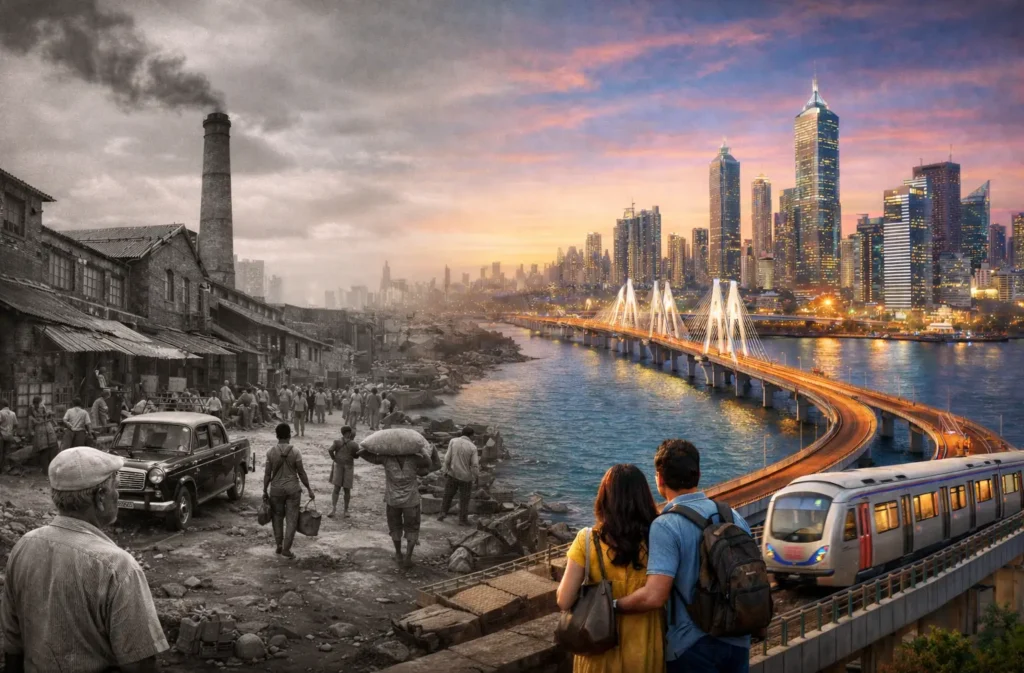
Mumbai has always been a city of change. For decades, the rhythmic sounds of textile mills and the smell of freshly baked biscuits defined the character of many neighborhoods. However, as you walk through the city today, the smoky chimneys of the past are being replaced by the gleaming glass windows of the future. The era of industrial Mumbai is making way for a new chapter: the rise of premium real estate.
The end of the industrial era
Historically, Mumbai was the industrial heartbeat of India. Areas like Lower Parel and Worli were famous for their massive textile mills, while the suburbs housed large manufacturing units and iconic factories. But as the city grew, these industries faced a challenge. Land became incredibly expensive, and the logistics of running a factory in a crowded city became difficult.
Slowly, manufacturing began moving to the outskirts where land is cheaper and transportation is easier. This left behind massive plots of land in the heart of the city—land that is now being put to a much more profitable use.
The rise of modern spaces
The transformation of these industrial plots is what experts call “redevelopment.” Instead of just leaving old buildings empty, developers are turning them into “mixed-use” spaces. This means a single plot of land might now hold a luxury apartment building, a high-end shopping mall, and a modern office complex all at once.
One of the most recent examples is the legendary Parle-G factory site in Vile Parle. For generations, this spot was known for producing India’s favorite biscuit. Today, it is set to become a massive commercial hub. This isn’t just about losing a landmark; it’s about the city evolving to meet the needs of a modern workforce that needs offices and retail spaces rather than factory floors.
Why is this happening?
There are three main reasons for this shift:
- Space Scarcity: Mumbai has very little land left. To build anything new, you have to reinvent something old.
- Economic Shift: The city’s economy has moved from making goods to providing services like finance, IT, and entertainment. These businesses need offices, not warehouses.
- Better Living Standards: Modern redevelopment often includes better infrastructure, organized parking, and green spaces, which improves the overall quality of the neighborhood.
Looking ahead
The skyline of Mumbai is no longer defined by smoke but by cranes. As more industrial zones, including port lands and railway areas, open up for redevelopment, the city will continue to look more like a global financial hub. While we may miss the nostalgia of the old factories, these new developments are providing the homes and offices that the next generation of Mumbaikars need to thrive.
Also read – New metro line to connect Mumbai and Navi Mumbai airports
Disclaimer – This article is for informational purposes only. The details regarding real estate trends and specific projects are based on general market reports and should not be considered financial or legal advice.
Source – Hindustan Times

Write Your Comment