
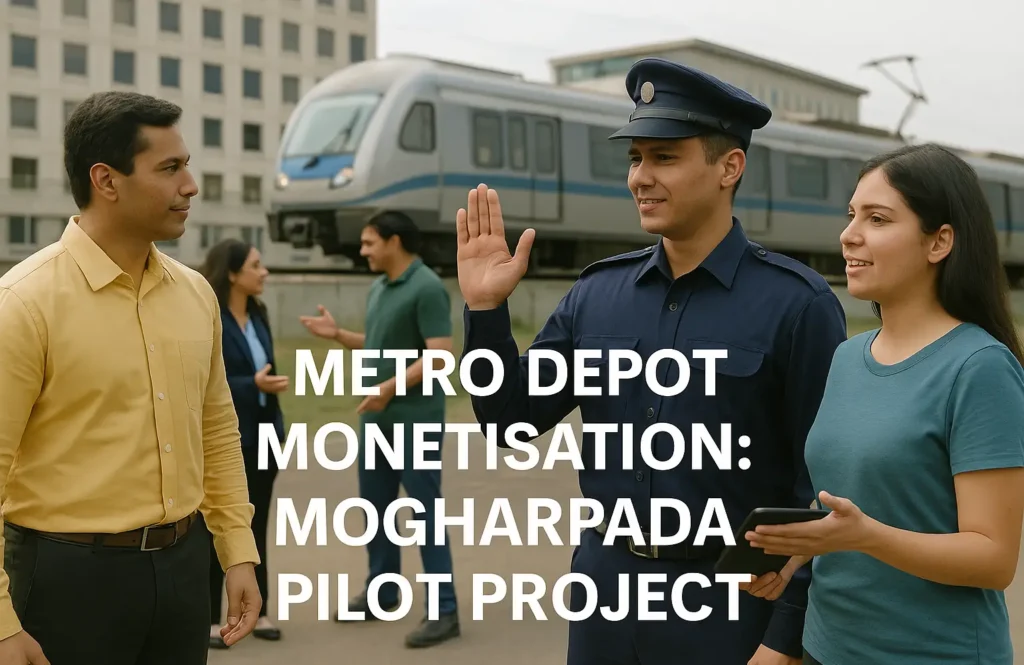
Mumbai and surrounding cities are constantly looking for innovative ways to use land efficiently. One such initiative is metro depot monetisation, where metro depot lands are partially converted into commercial or mixed-use spaces. Maharashtra has recently taken the first step with the Mogharpada depot in Thane, covering 45 hectares, marking a pilot for this concept.
Metro depots are essential for train operations, including maintenance and parking. However, large portions of depot land often remain unused. By monetising these areas, authorities can generate additional income while improving city infrastructure.
Details of the Mogharpada plan
The Mogharpada depot is a major hub that will serve four metro lines—Lines 4, 4A, 10, and 11. The government has proposed using parts of the depot land for commercial purposes, such as offices, retail spaces and public facilities. Residential development may be considered but is not the primary focus.
Key numbers include:
- Depot area: 45 hectares for Mogharpada
- Total MMR depot land for potential monetisation: nearly 100 hectares
- Metro lines served: 4, 4A, 10, 11
- Additional plans: space allocated for the Thane Coastal Road and a proposed sports complex
Feasibility studies are ongoing to determine:
- Placement of buildings without affecting depot operations
- Multi-level parking for trains
- Floor Space Index (FSI) limits
- The exact share of land for commercial or public use
Expected benefits
- Non-fare revenue: Monetising depot lands can provide a steady income for the metro, reducing the need to raise fares.
- Efficient land use: Scarce urban land is utilised productively, reducing pressure on other commercial areas.
- Transit-oriented development: Workers and residents can access offices and retail areas directly from metro stations, cutting road traffic and commuting time.
- Economic boost: Commercial development brings jobs, retail options, and services, revitalising underused areas.
- Urban planning: Integrating transit hubs with commercial spaces promotes sustainable, connected city growth.
Challenges and public concerns
While the initiative has many benefits, some citizens feel publicly owned land should prioritize civic facilities, parks, or housing over commercial exploitation. Experts suggest transparent planning and public consultations to ensure a fair balance between development and public interest.
The road ahead
The Mogharpada depot will serve as a pilot project. If successful, similar monetisation could extend to other depots across the Mumbai Metropolitan Region, potentially covering close to 100 hectares. Authorities are finalising operational and development plans to ensure safety and efficient use of space.
Metro-depot monetisation represents a fresh approach to urban growth using public transport land responsibly, creating revenue and supporting sustainable city development.
Also Read – No more paper chase: Maharashtra’s leap to valid digital land records
Disclaimer – This article is for informational purposes only. Figures and plans regarding metro-depot monetisation are based on public sources and do not represent official government approvals or future commitments.
Source – Hindustan Times

Write Your Comment